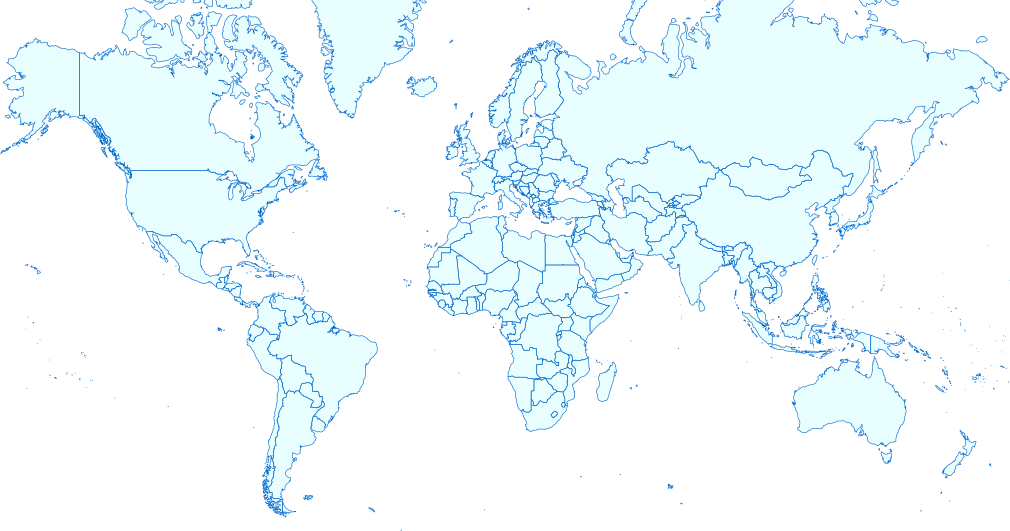
See the current world population and how many people are in the world right now. Watch the population of the world change in real time with live births and deaths, world population growth and country activity on an interactive population map. Estimates are based on yearly country averages from UN World Population Prospects data.
Current world population estimates from yearly country averages
Birth and death activity weighted by country data
Embed Population Map
Copy this iframe code to embed the live population map on your website. Free embeds are allowed as long as the PopulationMap.net credit and working link (outside the iframe also) remain visible. Sites that hide, crop, cover, or remove the credit may have embed access disabled.
Live estimated world population change by continent, calculated by PopulationMap.net from the latest United Nations data.
Loading population change…
Most Births Today
Most Deaths Today
Fastest Population Growth
Population & Demographic Signals
Recent demographic signals about world population growth, fertility rates, births, deaths, life expectancy, aging populations, migration and population projections.
Within the lifetime of children being born today, the global human population is projected to begin shrinking for the first time since the Black Death — no country on Earth curren…
Google News • 93 days ago • Jun 17, 2026
Current World Population
What Is the Current World Population?
The current world population changes continuously as births and deaths occur. The live counter above estimates the number of people alive right now from a dated population baseline plus the average net population change over time.
Because no system can count every person on Earth second by second, the total is a live demographic estimate rather than an exact census count.
How Many People
How Many People Are in the World Right Now?
If you want to know how many people are in the world, the number above is our continuously updated estimate. It combines the population baseline with estimated births, deaths and net growth since that reference time.
The counters beside it also show how many births and deaths are estimated to have occurred during the current UTC day.
Population of the World
What Is the Population of the World?
The population of the world means the estimated number of people living across all countries and territories combined. PopulationMap.net visualizes that global total together with country-level demographic activity.
The map makes the worldwide number easier to understand by showing where births, deaths and population change are concentrated.
World Population Clock
What Is a World Population Clock?
A world population clock is a continuously updating estimate of global population. It starts from a known population estimate and applies average birth and death rates to approximate how the total changes over time.
The clock on this page is paired with the live map so you can watch the estimated global total and geographic activity together.
Population Growth
How Fast Is the World Population Growing?
World population growth is driven by the difference between births and deaths. The site converts yearly demographic totals into per-second rates and uses the difference as the estimated net population change.
The live net-growth counter shows the estimated increase or decrease since the start of the current UTC day.
Births & Deaths
How Does the Live Birth and Death Map Work?
The interactive map converts yearly country birth and death estimates into a live visual stream. Countries with more annual births or deaths appear more often because events are weighted by country-level demographic activity.
Population estimates are based on UN World Population Prospects data processed into yearly country averages. The animated events are statistical estimates, not individual hospital or civil-registry records.